

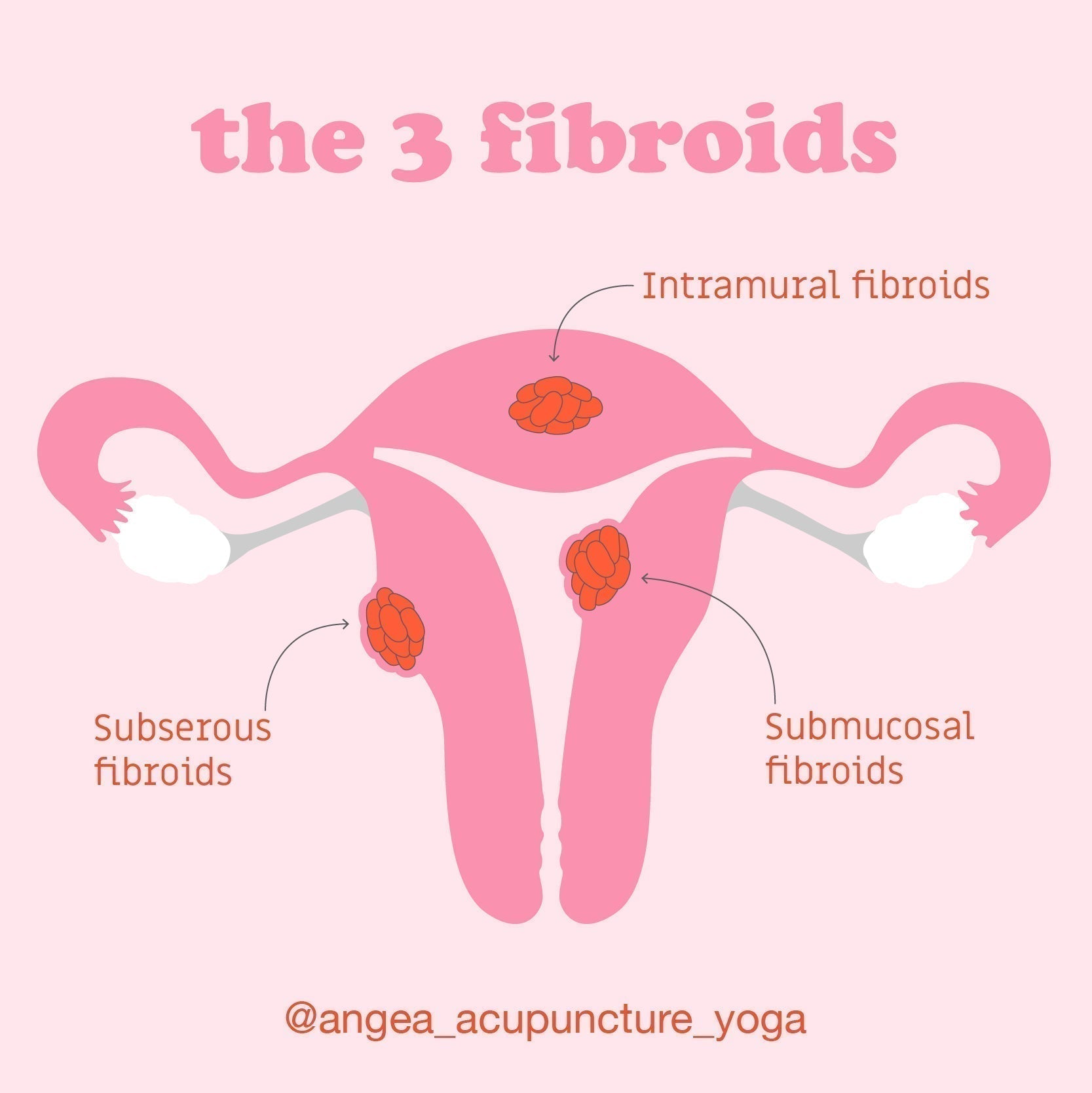
What Are Fibroids?
Let’s talk fibroids ladies.
Research shows that hormones estrogen and progesterone play a role in the growth of fibroids.
Uterine fibroids occur when muscle cells in the uterus multiply too many times. As cells multiply, lumps of various shapes and sizes form.
Fibroids are often diagnosed by pelvic ultrasound and are classified by location, number and size.
There are 3 common locations.

Intramural ~ grow within the uterine wall and can cause heavy menstrual flow, urinary frequency, back and pelvic pain.
Submucosal ~ grow under the uterine lining (endometrium) and can protrude into the uterine cavity
Subserosal ~ grow on the outer surface the uterus.
Chinese Medicine describes fibroids by their size and shape:

Pea 1cm
Walnut 3cm
Lemon 5.5cm
Apple. 7.5cm
Orange 9cm
Grapefruit 11.5cm
In a recent study funded by the NIH, it was found that one of the genes HOXA13 associated with fibroids appeared to correlate with a transformation of cells in the muscle of the uterus into cells that are typically found in the cervix. Essentially its a cell type in a position where it doesn’t belong.
From my research with Endo/Adeno/fibroids- there seems to be an underlying theme of “cell to cell miscommunication that causes/leads to breakdown of functionality of the cell”. think of broken traffic lights – how much confusion that causes! Cells and tissue become confused growing in areas that are out of bounds, or multiplying!
Some women are more likely to develop fibroids due to genetic inheritance and 60% of women with African ancestry by the age of 35 will have developed fibroids. Fibroids can be debilitating, are a major cause of heavy menstrual bleeding, iron deficiency, potentially causing anaemia, pressure sensation on the bladder, back or bowel, swelling in abdomen, period pain and sometimes painful sex.
If you have any questions, comments or would love to share, reach out.