

Stress & Your Fertility
Everyone hears that stress can have a negative impact on your fertility and reproductive health, but have you ever wondered exactly how?
The human reptilian brain has 3 specific inbuilt survival functions: Procreation ~ survival of the species Hunt & Gather ~ food, thirst, body temp Survival
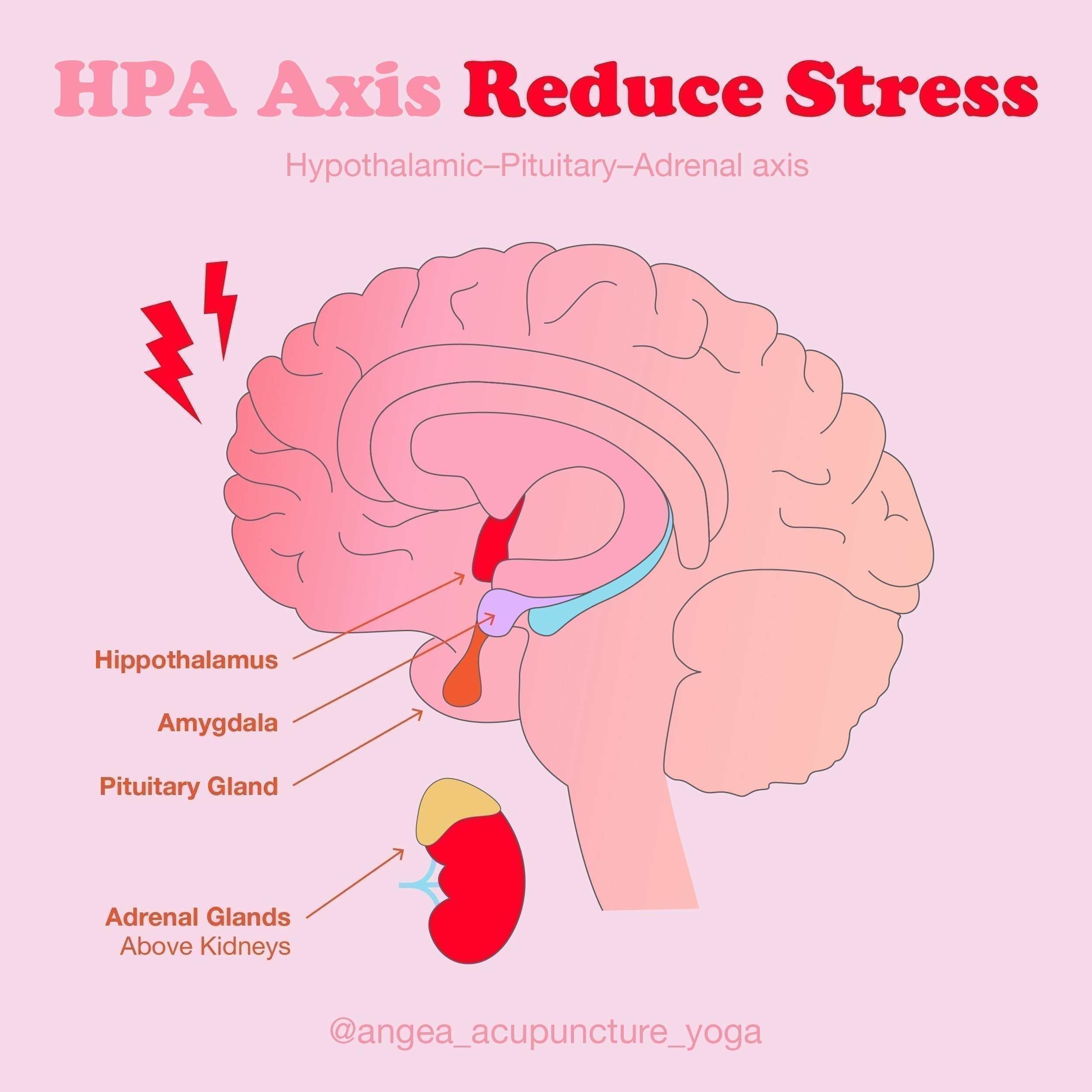
During stress, the adrenal glands which sit on top of the kidneys are stimulated to produce stress hormones including cortisol and adrenalin. This process happens due to a mechanism which begins in the brain, specifically, in the hypothalamus. The hypothalamus is the command Center.
Stress is perceived through perception (sight) which is relayed via neurotransmitters to the Amygdala. The amygdala sends a distress signal to the hypothalamus! Activation of the sympathetic nervous system (flight, fight or freeze) occurs.
The hypothalamus, pituitary gland, and adrenal gland work together through feedback mechanisms to perceive these stressors in the environment and produce the necessary stress hormones that enhance survival in challenging times. Though these hormones allow the body to successfully overcome major stresses and threats, they are often counterproductive when trying to conceive. Particularly for women, too much stress shuts down the reproductive system (procreation) and the period disappears. The message reads “I can’t have a baby right now, I’m in survival mode”.
During an IVF cycle, people experience stress at different levels and it’s no wonder. Recent research has shown that for many women infertility can create levels of anxiety and depression equivalent to women with cancer, HIV status or heart diseases.
While stress in the short term is not a bad thing, overtime chronic stress puts our health, wellbeing and fertility at risk. High levels of stress have been shown to: alter the function of the hypothalamus gland, which controls ovulation; contribute to irregular menstrual periods; produce high levels of cortisol, the fight-or-flight hormone;
decrease reproductive hormones like estrogen and progesterone; divert blood flow from the ovaries and uterine lining, thereby affecting egg quality and successful implantation.